Jessica’s Story: Finding Her Husband on Tinder
When Jessica’s gut said something was off, a private lookup with name, age, and city—and a reviewed report—gave her the clarity to move forward.

Jessica never imagined that a quiet evening on the couch would change everything she thought she knew about her marriage. Married for seven years, she and her husband, Mark, had always seemed like the perfect couple to their friends — shared vacations, family dinners, and constant laughter. But behind the smiles, Jessica had started noticing small changes that didn’t sit right.
Mark had become distant, constantly glued to his phone, and more protective of it than ever. He started working “late nights” and going out with friends she’d never heard of. When Jessica asked questions, he brushed them off, saying she was overthinking.
At first, she believed him. After all, every couple goes through phases, right? But her intuition told her something was off — and she couldn’t shake that uneasy feeling.
The Moment Everything Changed
One night, while scrolling on social media, Jessica came across a post from a friend about discovering a partner’s dating profile. The story hit too close to home. Curiosity — or maybe fear — pushed her to check if Mark could be doing the same.
She used DoTheySwipe, entering his first name, age, and city — nothing more than the service asks for a standard lookup. There was no instant dashboard; after checkout, she waited while the search was processed and reviewed, typically within 24 hours.
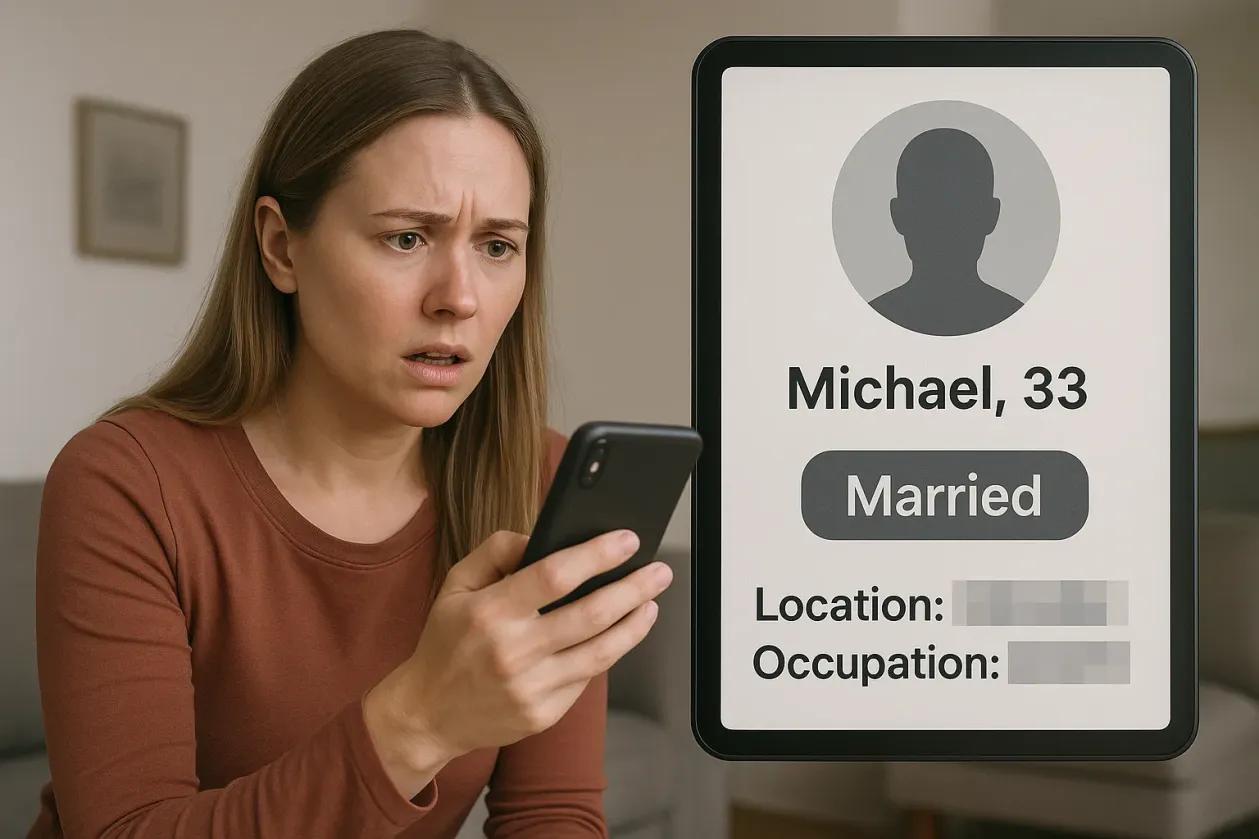
When the results email arrived, the report pointed to a likely active match aligned with those identifiers in their area. It wasn’t proof of messages or meetings, but it was enough to confirm her fear had been grounded in something real.
Jessica stared at the screen in disbelief. The man she shared her home, her secrets, and her future plans with might have been active on Tinder while telling her everything was fine.
Denial, Anger, and the Search for Answers
The next few days felt like a blur. She oscillated between disbelief and anger. She told herself there must be a mistake — maybe a common name collision in a big city?
But deep down, she knew the signs had been there for months — the late replies, the sudden gym obsession, the extra attention to his looks, and the new cologne.
Jessica decided to confront him.
When she explained what the reviewed report showed, Mark froze. Then came the excuses: “It’s not what it looks like,” “It’s just for fun,” “I never met anyone in person.”
But for Jessica, it didn’t matter. Whether he met someone or not, the betrayal had already happened. Creating or keeping that activity was a choice — one that broke her trust completely.
Emotional Fallout
Discovering your partner’s infidelity, even emotional or digital, is like an earthquake — it shakes everything you thought was stable. Jessica went through the classic stages: denial, anger, sadness, and eventually, acceptance.
She couldn’t eat or sleep properly for weeks. Every notification sound made her heart race. Every time she saw a couple holding hands, she felt the sting of what she’d lost.
But instead of suppressing her emotions, Jessica decided to face them. She talked to friends, went to therapy, and joined online forums where others shared similar experiences. Reading stories from women who had also found their partners on Tinder made her realize she wasn’t alone.
Understanding Why People Do It
As part of her healing, Jessica wanted to understand why. Why would someone in a committed relationship seek attention from strangers?
Through therapy and research, she learned that infidelity isn’t always about sex or finding someone new. Sometimes it’s about validation, ego, or escapism. People like Mark often crave the thrill of being desired — even if it means destroying the trust of the person who truly loves them.
Still, knowing the reasons didn’t justify his actions. Jessica realized she couldn’t fix someone who didn’t respect their relationship enough to be honest.
Rebuilding After Betrayal
After a few months, Jessica made the hardest decision of her life — she left. Moving out was painful, but staying in a relationship built on lies would’ve been worse.
She started focusing on herself again — a pattern common among those who date right after divorce, where healing and rediscovery go hand in hand. She took up painting, reconnected with old friends, and began traveling solo — something she’d always wanted to do but never dared to when she was married.
The healing wasn’t instant, but little by little, she felt lighter. She learned to trust herself again — her intuition, her worth, her ability to stand alone.
Lessons from Jessica’s Story
Jessica’s experience isn’t unique. Many people today discover their partner’s infidelity online. The rise of dating apps has made secret relationships easier to hide — but also easier to uncover.
Here’s what Jessica says she learned through it all:
- Listen to your intuition. That uneasy feeling isn’t paranoia — it’s your mind picking up on inconsistencies.
- Communication matters. If your partner shuts down every time you express worry, something deeper might be wrong.
- Emotional cheating is still cheating. Seeking validation or intimacy outside the relationship crosses a boundary, even if there’s no physical contact.
- You can’t control someone else’s honesty. No amount of love or patience can fix a partner who chooses deceit.
- Healing takes time — but it happens. The pain eventually fades, replaced by strength and clarity.
Life After Discovery
A year later, Jessica says she’s in a much better place. She doesn’t check Mark’s social media anymore, nor does she feel the urge to know what he’s doing.
She learned that closure doesn’t always come from the other person — it comes from within.
Now, she’s dating again — carefully, slowly, and on her own terms. She says the experience changed how she sees love.
“ I used to think love meant trust without question, now I know it means honesty, respect, and consistency.”
How Others Can Protect Themselves
Jessica hopes her story encourages others to trust their instincts. If you feel that something isn’t right, it’s okay to look for answers.
Many people use modern tools to confirm suspicions quietly and privately. While confronting the truth can be painful, knowing is always better than wondering.
Uncertainty keeps you stuck; clarity sets you free.
If you’re in a similar position, remember: the discovery doesn’t define you — your response does. You deserve transparency, loyalty, and peace of mind.
Final Thoughts
Jessica’s story isn’t just about betrayal — it’s about rediscovery. She went from feeling broken to realizing her own strength.
In her words:
“Finding my husband on Tinder felt like the end of everything. But it turned out to be the beginning of me finding myself.”
Sometimes, the truth hurts. But it also heals. Knowing what’s real — even when it’s painful — gives you the power to move forward, rebuild, and never settle for less than honesty again.
If you’re in a similar situation, learn how to find someone on Tinder — privately and safely.
Illustrative story for education only. Names and details are composite; individual results vary. A DoTheySwipe report indicates possible Tinder activity from available signals—it is not proof of cheating or intent.
Looking for Someone?
Our search tool can help you find dating profiles and verify online activity with just a name.
Related Articles

Alex Found His Wife on Tinder
After months of suspicion, Alex used a private lookup with name, age, and city. A reviewed report within 24 hours gave him the clarity he needed.
DoTheySwipe Exposed Her Husband’s Hidden Profile
After months of small red flags, she ran a private Tinder lookup with name, age, and city. The reviewed report gave her clarity she could act on.

Tinder for Married People: Why It Happens and How to Check (2026)
Married people use Tinder more than you'd think. Here's why it happens, what the data shows, and how to check if your spouse might be one of them.